

What to Look for when Buying a Home with a Crawl Space
WHAT TO LOOK FOR
PURCHASING A HOME WITH A CRAWL SPACE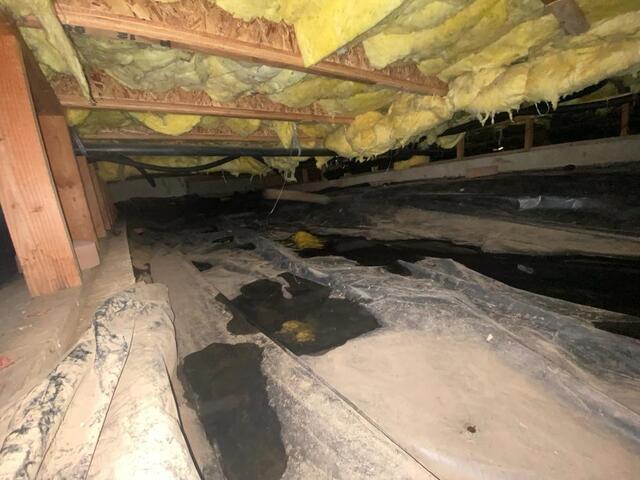
Finding your dream home is an exciting milestone, but if you live in the PNW—or any region with high seasonal rainfall—that dream house likely comes with a damp crawl space. While out of sight and out of mind, your crawl space plays a massive role in the overall health, energy efficiency, and structural integrity of the home. Up to 50% of the air you breathe in the living space originates in the crawl space due to natural air movement, known as the "stack effect". Before signing on the dotted line, here is what you need to look for, the major red flags to watch out for, and how to turn a questionable crawl space into a clean, healthy asset.
1. Standing Water or Chronic Mud
-
What to Look For: Puddles, mud channels, or water marks along the foundation footers.
-
Why It Matters: Standing water leads to soil saturation, home settlement, elevated humidity, and wood rot.
-
The Solution: A home needs a proper internal drainage channel and a high-performance sump pump system (such as the SuperSump Plus or TripleSafe) designed specifically to handle groundwater intrusion in below-grade spaces.
2. Damaged or Inadequate Vapor Barriers
-
What to Look For: Thin, torn 6-mil black plastic vapor barriers with exposed dirt underneath, or no ground cover at all.
-
Why It Matters: Bare earth continuously releases moisture into the crawl space, accelerating wood damage and attracting pests.
-
The Solution: Standard 6-mil plastic easily rips and tears over time. Look for a complete crawl space encapsulation system utilizing a heavy-duty, puncture-resistant liner like the 20-mil CleanSpace which has woven fibers built-in to make it durable.
3. Open Vents and High Humidity
-
What to Look For: Open foundation vents, damp wood framing, or condensation dripping from ductwork and pipes.
-
Why It Matters: Outside air carries humidity. In summer, warm, moist air enters the cool crawl space, condenses on joists, and creates the ideal breeding ground for mold and wood-destroying fungi.
-
The Solution: Modern building science favors sealing open vents with airtight covers, insulating the rim joists, and controlling ambient moisture using a dedicated crawl space dehumidifier like the SaniDry.
4. Mold and Fallen Insulation
-
What to Look For: Sagging fiberglass batts between floor joists, dark staining on wood framing, or a strong "musty" odor inside the house.
-
Why It Matters: Fiberglass insulation acts like a sponge for moisture in unsealed crawl spaces. When saturated, it gets heavy, pulls away from the floor, and traps moisture against structural wood, promoting mold growth and rot.
-
The Solution: Old fiberglass should be safely removed and replaced with rigid foam or spray insulation that do not absorb water or support mold growth.
5. Signs of Structural Settlement
-
What to Look For: Sloping floors on the main level, sticking interior doors, drywall cracks, or rotting beam supports underneath.
-
Why It Matters: High humidity causes wood joists to weaken, while moisture-saturated soil causes foundation footers to sink.
-
The Solution: Structural problems can be stabilized using heavy-duty adjustable steel SmartJacks to lift floor joists back toward their original position.
Don't Let Crawl Space Issues Cancel Your Closing
If a home inspection reveals moisture, standing water, or mold under a home you want to buy, don't panic. Most crawl space issues can be permanently corrected with the right drainage and encapsulation systems. At John's Waterproofing, we have helped homeowners and home buyers across Oregon and Washington protect their investments for decades. Before you finalize your home purchase, contact us today to schedule a free, comprehensive crawl space inspection and estimate with one of our dedicated Real Estate Response Specialists.