

The Difference Between Push and Helical Piers
PUSH PIERS AND HELICAL PIERS
DETERMINING THE RIGHT FOUNDATION SOLUTION FOR YOUR SETTLING HOME
When a home begins to settle or its foundation shows signs of movement—like cracks in the walls, uneven floors, or sticking doors, foundation piers are often the most reliable solution. At John’s Waterproofing, two of the most common systems used are push piers and helical piers. While both are designed to stabilize and support your home, they work in different ways and are best suited for different situations.
What Are Push Piers?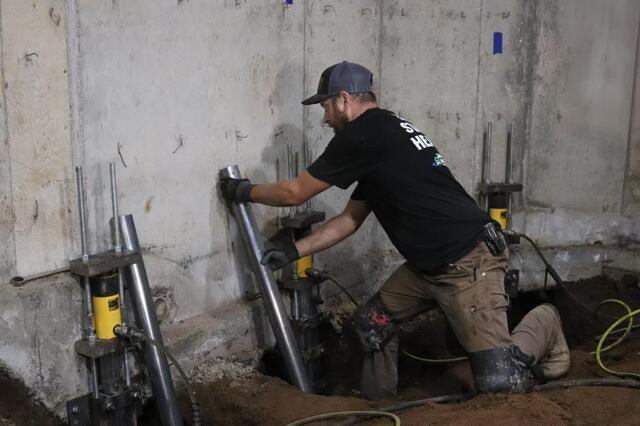
Push piers are long steel tubes that are driven deep into the ground beneath your home’s foundation using hydraulic pressure. These piers are pushed through unstable soil layers until they reach the solid, load-bearing strata. This allows the weight of the home to rest on this stable soil far below.
Because they rely on the weight of the structure to drive them into the ground, push piers are ideal for heavier homes or structures. Once installed, they can often lift the home back toward its original position, helping to correct settlement issues.
Best for:
- Heavy structures
- Deep soil instability
- Significant foundation settlement
What Are Helical Piers?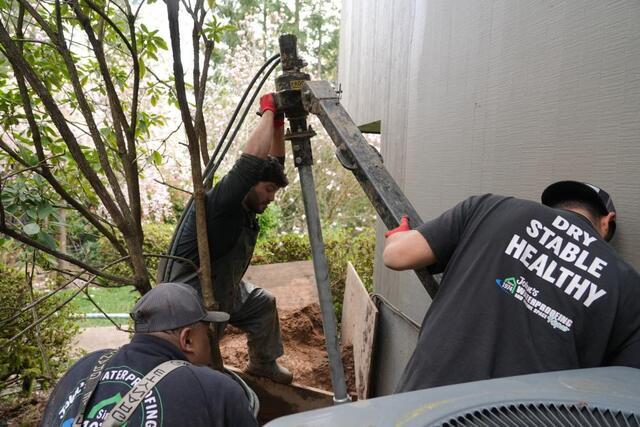
Unlike push piers, helical piers do not rely on the weight of the structure, making them a great choice for lighter buildings, porches, decks, or new construction projects. They also perform well in areas with more variable soil conditions.
Best for:
- Lighter structures
- New construction or additions
- Areas with shallow or inconsistent soil
Key Differences to Consider
While both systems achieve the same goal—stabilizing your foundation—their differences matter when choosing the right solution:
- Installation Method:
Push piers are driven straight down using hydraulic force, while helical piers are mechanically drilled into the soil. - Load Requirements:
Push piers depend on the structure’s weight; helical piers do not. - Soil Conditions:
Push piers work best when stable soil is deep below the surface, whereas helical piers are effective in a wider range of soil types. - Project Type:
Push piers are commonly used for repairing existing homes, while helical piers are often used for both repairs and new builds.
Choosing between push and helical piers isn’t a one-size-fits-all decision. Soil composition, structure weight, and the extent of foundation damage all play a role. That’s why the experienced team at John’s Waterproofing carefully evaluates each home to recommend the most effective solution.
If you’re noticing signs of foundation settlement, don’t wait for the problem to worsen. Contact John’s Waterproofing today for a professional inspection and peace of mind so you can know your home is on solid ground.